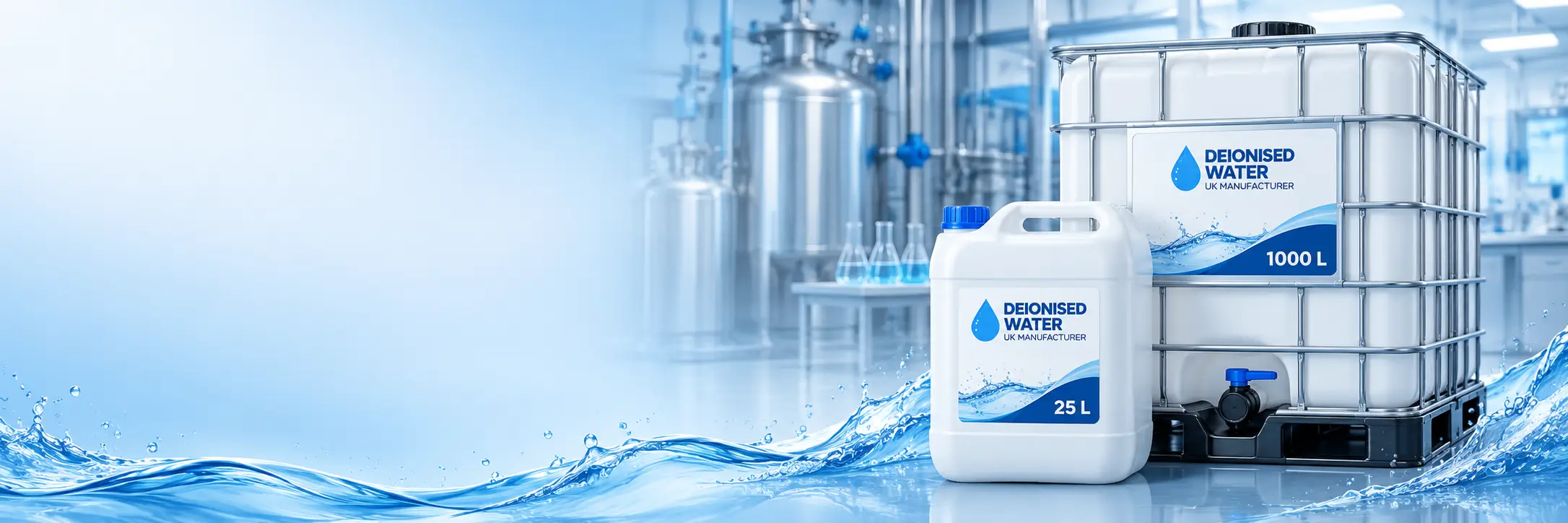
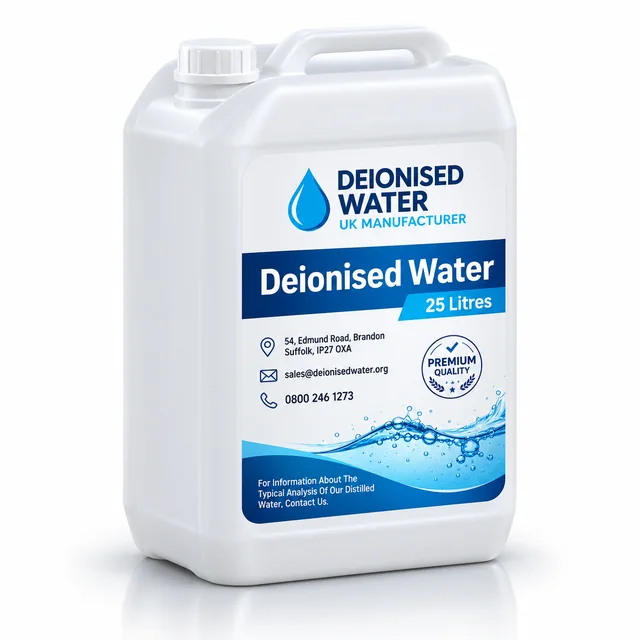
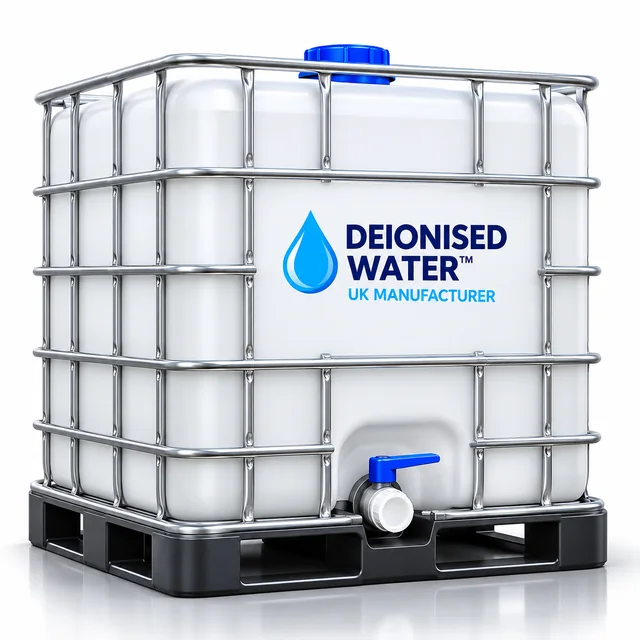
High-purity autoclave deionised water for laboratories, hospitals, dental clinics and research facilities. Available in 25 litre containers and 1000 litre IBCs.
Trusted by laboratories, manufacturers, workshops and industrial facilities across the UK
20+ YearsIndustry Experience
UK-WideSupply
Certificateof Analysis (COA)
Deionised Water for Autoclave Machines
High-purity water is essential for safe and effective sterilisation equipment. Deionised water for autoclave machines is specially purified to remove dissolved minerals and ions that may affect steam generation, ensuring reliable sterilisation results.
We supply high-quality autoclave deionised water for laboratories, hospitals, dental clinics, and research facilities. The deionised water fed to sterilisers is produced using advanced purification methods and strict quality control, ensuring suitability for laboratory and medical sterilisation systems.
Customers can buy deionised water for autoclave machines in multiple container sizes for both small clinics and large healthcare facilities across the UK.
Batch monitored for TDS
25 litre and 1000 litre IBC
Next day delivery where possible
UK-wide coverage
Why Autoclaves Require Deionised Water
Autoclaves use high-pressure steam to sterilise equipment. The water used must be free from minerals and contaminants, making DI water for autoclaves essential.
Tap water contains minerals like calcium and magnesium, which can form limescale and damage internal components. Using deionised water reduces scaling, improves steam efficiency, and ensures consistent sterilisation performance.
We provide laboratory-grade autoclave deionised water that protects equipment and ensures smooth operation.
Check your autoclave manual first.
Manufacturers differ. Some machines use conductivity-based water level sensors and need water with a minimum conductivity, and a few lab models advise softened water instead of very pure water. The European standard EN 13060 for small steam sterilisers sets feed water limits, including conductivity below 15 µS/cm. Always follow the water specification for your own machine, and contact us if you want help choosing.
Deionised, Distilled, RO or Tap Water in an Autoclave
Water type
How it is made
In an autoclave
Deionised (DI)
Ion exchange resins remove mineral ions
Prevents scale and mineral buildup. Check your manual if your machine has conductivity sensors.
Distilled
Boiling and condensing steam
Also widely used and suitable for many machines.
Reverse osmosis (RO)
Forced through semipermeable membranes
Suitable if purity sits within your manufacturer's limits.
Tap water
Mains supply, untreated
Calcium and magnesium form limescale, so it is not recommended.
Key Features of our Deionised Water for Autoclave
High-grade water for sterilisation equipment
Controlled TDS and ppm levels
Suitable for medical sterilisation
Compatible with lab and healthcare systems
Strict quality control standards
Reliable UK supply
All batches are monitored for TDS to maintain high-purity water for sterilisers.
Available Packaging Options
Flexible packaging options are available for different operational needs.
25 Litre Deionised Water for Autoclaves
Ideal for small facilities requiring manageable quantities of DI water for autoclaves. Easy to store and handle for daily sterilisation use.
Typical users include: dental clinics, small laboratories and medical departments.
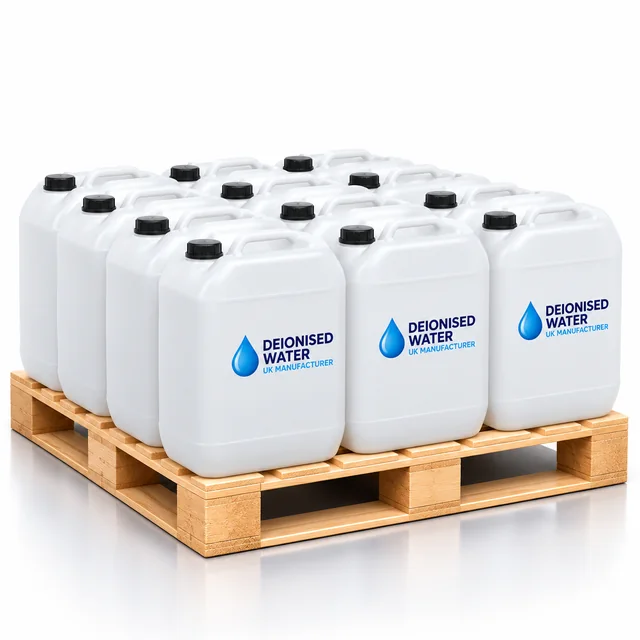
A pallet of sixteen 25 litre containers for regular users. Keeps a steady supply of deionised water for autoclave machines on site at a better value per litre.
Various industries rely on deionised water for autoclave machines for sterilisation.
Medical & Healthcare Facilities
Used to sterilise surgical instruments and ensure contamination-free processes.
Dental Clinics
Ensures hygienic sterilisation and protects equipment.
Scientific Research Laboratories
Used to sterilise lab equipment and maintain controlled environments.
Pharmaceutical Manufacturing
Supports sterile production environments with high-purity water for sterilisers.
Advantages of Using High-Purity Water in Autoclaves
Prevents scale buildup
Protects internal components
Improves steam quality
Extends equipment lifespan
Reduces maintenance costs
Using autoclave deionised water ensures consistent sterilisation results.
Good Practice for Autoclave Water
Refill reservoirs with fresh water, and empty and clean them regularly.
Store containers sealed and away from direct sunlight so the water stays clean.
Use the water type and purity your autoclave manufacturer specifies.
Why Choose our Autoclave Deionised Water
The Deionised Water Company is a trusted UK supplier of autoclave water for laboratories and healthcare sectors. Our advanced purification removes impurities and ensures every batch meets required standards.
We provide reliable supply, competitive pricing, and bulk ordering options for DI water for autoclaves. We support healthcare and research facilities with reliable medical sterilisation water.
Frequently Asked Questions
What type of water is used in autoclaves?
High-purity water such as deionised or distilled water is commonly used, because it stops limescale forming on heaters, sensors and valves. The exact type depends on your machine, so always check the water specification in your autoclave manual first.
Can deionised water be used in autoclaves?
Yes, in most autoclaves it prevents scaling and improves performance. A few models use conductivity-based water level sensors and need water with a minimum conductivity, so confirm with your manufacturer before switching.
Can I use deionised water in a dental autoclave?
Many dental and benchtop steam sterilisers are designed for distilled or deionised water, and our 25 litre containers suit clinics that refill a reservoir daily. Check your steriliser handbook for the water quality it requires.
Why not use tap water in an autoclave?
Tap water contains calcium, magnesium and other minerals that cause mineral buildup, reduce efficiency and shorten the life of the equipment.
What is the difference between distilled and deionised water?
Distilled water is purified by boiling and condensing steam, whereas deionised water has its ions removed by ion exchange resins. Both are suitable for many autoclaves.
What purity and TDS level is required?
Very low TDS water is recommended for most autoclaves, and near-zero TDS is ideal for scale prevention. Your manufacturer may also set a minimum conductivity, so follow their guidance.
How often should autoclave water be replaced?
Regularly, often daily or as set out in the manufacturer guidelines. Empty and clean the reservoir before refilling with fresh water.
Where can I buy deionised water for autoclaves in the UK?
You can buy it from The Deionised Water Company in 25 litre containers and 1000 litre IBCs, with delivery across the UK.
Order high-quality deionised water for autoclave machines easily with flexible quantities and fast UK delivery. Contact our team for quotes or bulk supply of deionised water for sterilisers.